
Shipping to Abuja from the USA: Why Air Freight Often Wins
Shipping cargo to Abuja from the USA — direct air freight vs sea via Lagos, the overland leg, FCT delivery areas, and how to choose between them.
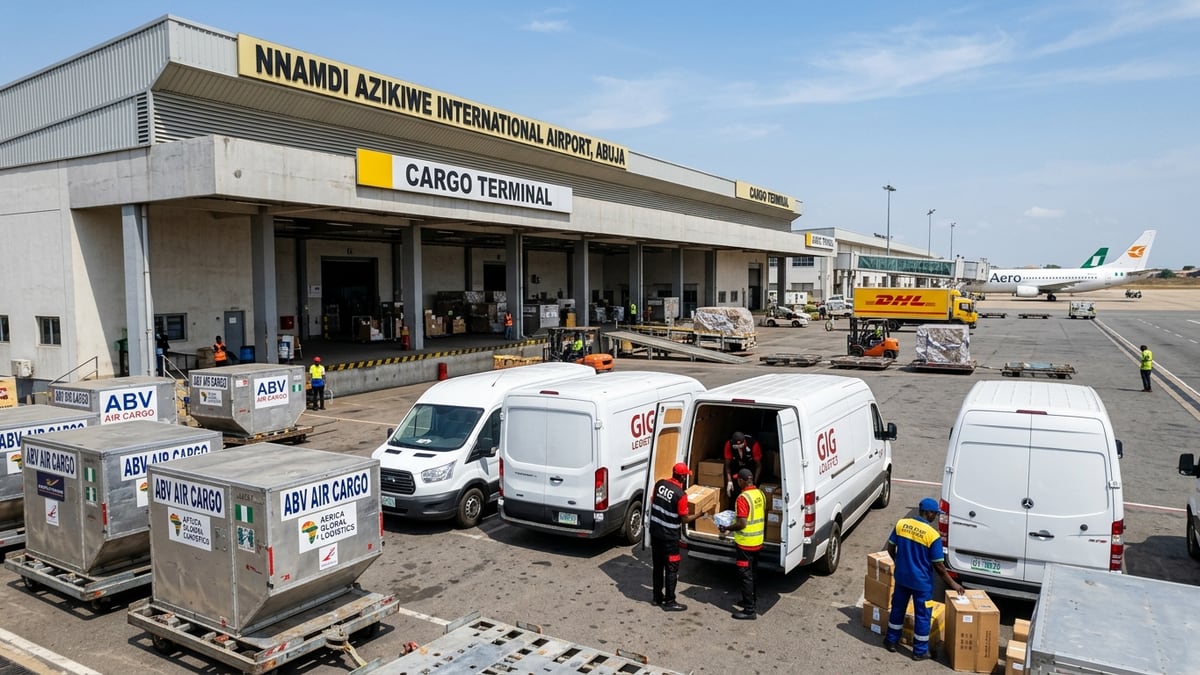
Abuja is a completely different logistical problem from Lagos, and advice that saves you money on a shipment to Lagos can easily cost you extra cash and weeks of frustration when shipping to the Federal Capital Territory (FCT).
Before you book your cargo from Texas, Georgia, Maryland, or anywhere in the United States, here is the geographic and economic reality every shipper needs to understand.
The Geography Problem
Abuja is completely inland. There is no ocean coastline, no natural deep-sea port, and no river terminal capable of receiving international container ships.
When you ship via sea freight to Abuja, your container discharges at the ocean terminals of Apapa or Tin Can Island in Lagos. After ocean discharge and customs clearance, the cargo must be transferred onto long-haul cargo trucks for an overland highway journey of roughly 750 kilometres across multiple states to reach the FCT.
What the Overland Leg Involves:
- Adds roughly 3 to 5 working days after port release
- Incurs dedicated inter-state line-haul haulage charges
- Requires additional handling, trans-loading, and security escorts
By contrast, air freight flies direct into Nnamdi Azikiwe International Airport (ABV). It lands, enters the airport cargo terminal, clears customs in Abuja, and moves straight to our local delivery vans. There is zero Lagos port involvement whatsoever.
When Air Freight Is the Right Call
For the majority of personal consignments destined for Abuja — one or two 55-gallon barrels, luggage boxes, electronics, designer clothing, or personal care products — air freight wins hands down.
Once you calculate ocean freight plus the mandatory overland haul from Lagos to Abuja, the cost savings of ocean shipping shrink dramatically. On a single barrel or a 60 lb box, the cost difference is often negligible, yet air freight saves you five to seven weeks of waiting.
Furthermore, flying direct to Abuja allows you to completely bypass the notorious bottlenecks and congestion of Lagos seaports. On a month with heavy port congestion, that peace of mind is worth far more than the minor difference in freight tariff.
Check our official Shipping from USA to Abuja service page for current per-pound air cargo rates and flight schedules.
When Sea Freight Still Wins
So when should you choose sea freight to Abuja? The answer is simple: sheer volume.
If you are shipping complete furniture sets for a multi-bedroom duplex, heavy tiles, bathroom fixtures, commercial generators, automotive engines, or multiple shrink-wrapped warehouse pallets, air freight becomes prohibitively expensive.
The rough dividing line sits around 2 to 3 cubic metres (CBM). Once your shipment exceeds that threshold, the economies of scale of ocean shipping easily absorb the $150 to $250 overland trucking surcharge from Lagos to Abuja, making sea freight significantly cheaper overall.
Clearing Customs at Abuja (ABV)
Clearing air cargo through Nnamdi Azikiwe International Airport is generally much smoother and faster than navigating maritime terminals in Lagos. The customs inspection bays are less crowded, and paperwork verification moves briskly.
However, standard Nigerian Customs Service compliance rules still apply:
- Provide a specific, itemised packing list rather than vague terms like "goods".
- Ensure the recipient’s phone numbers are functional and answered promptly.
- Avoid prohibited items such as counterfeit electronics or uncertified pharmaceuticals.
Door-to-Door Delivery Across the FCT
From our Abuja hub at Wuye Ultra Modern Market, our local delivery vans provide daily door-to-door distribution across:
Not Sure Which Option You Need?
Send us the weight and dimensions of your cargo. We will run both the air and sea numbers side by side and advise you on the most economical route.