
Whether you are sending personal belongings to your family, delivering products to customers or moving commercial goods, choosing the right cargo service can save you time, money and unnecessary stress.
County Cargo provides reliable cargo shipping from the UK to Nigeria, with options for urgent packages, regular weekly shipments and larger consignments. This guide explains how the process works, how much shipping may cost, how long delivery normally takes and what you need before sending your items.
What Shipping Options Are Available from the UK to Nigeria?
The best service depends on the size of your shipment, your budget and how quickly the goods are required.
Standard Air Cargo
Standard air cargo to Nigeria is suitable for clothing, household goods, business stock and other permitted items that need to reach Nigeria reasonably quickly without the higher cost of an express service.
County Cargo’s estimated standard air-cargo delivery time is 5–10 working days, subject to the weekly shipping schedule, airline movement, customs clearance and local delivery arrangements.
Express Air Cargo
Express cargo is designed for urgent and time-sensitive shipments. It is often suitable for documents, important personal items, samples and smaller packages needed within a few days.
County Cargo’s estimated express delivery time from the UK to Lagos is 2–3 working days, subject to acceptance, flight availability and customs clearance.
Sea Cargo
Standard sea cargo to Nigeria can be a more economical choice for large or heavy shipments that are not urgent. It is commonly used for household items, machinery, business stock and bulk consignments.
County Cargo’s estimated sea-cargo delivery time is 30–45 working days. Sea freight takes longer than air cargo, so customers should allow additional time for vessel schedules, port operations and customs clearance.
How Much Does It Cost to Ship Cargo from the UK to Nigeria?
Shipping costs depend on the weight or volume of the package, the destination in Nigeria, the selected service and whether collection or local delivery is required.
County Cargo’s indicative rates are:
| Service | Destination | Indicative Rate | Estimated Delivery Time |
|---|---|---|---|
| Standard Air Cargo | Lagos | £6 per kg, plus £15 handling | 5–10 working days |
| Standard Air Cargo | Abuja | £6.50 per kg, plus £15 handling | 5–10 working days |
| Express Air Cargo | Lagos | £22 per kg, plus £15 handling | 2–3 working days |
| Express Air Cargo | Abuja | £23 per kg, plus £15 handling | Confirm when booking |
| Sea Cargo | Nigeria | From £4 per kg, with a 30 kg minimum | 30–45 working days |
These prices are a guide and may change. The final quotation can be affected by dimensions, destination, customs requirements, special handling and last-mile delivery. Always confirm the current rate with County Cargo before sending your goods.
What Information and Documents Are Required?
Most personal shipments are straightforward, but the sender should provide complete and accurate information. You will normally need:
- The sender’s full name, telephone number and address
- The recipient’s full name and Nigerian telephone number
- The complete delivery or collection address in Nigeria
- A clear description of every item in the shipment
- The quantity and estimated value of the goods
- A commercial invoice for goods purchased for resale or business use
- Identification or additional customs documents when requested
Incorrect contact details or a vague description such as “personal items” may cause questions or delays. Describe the contents clearly and honestly when completing your shipment information.
How to Prepare Your Cargo for Shipping
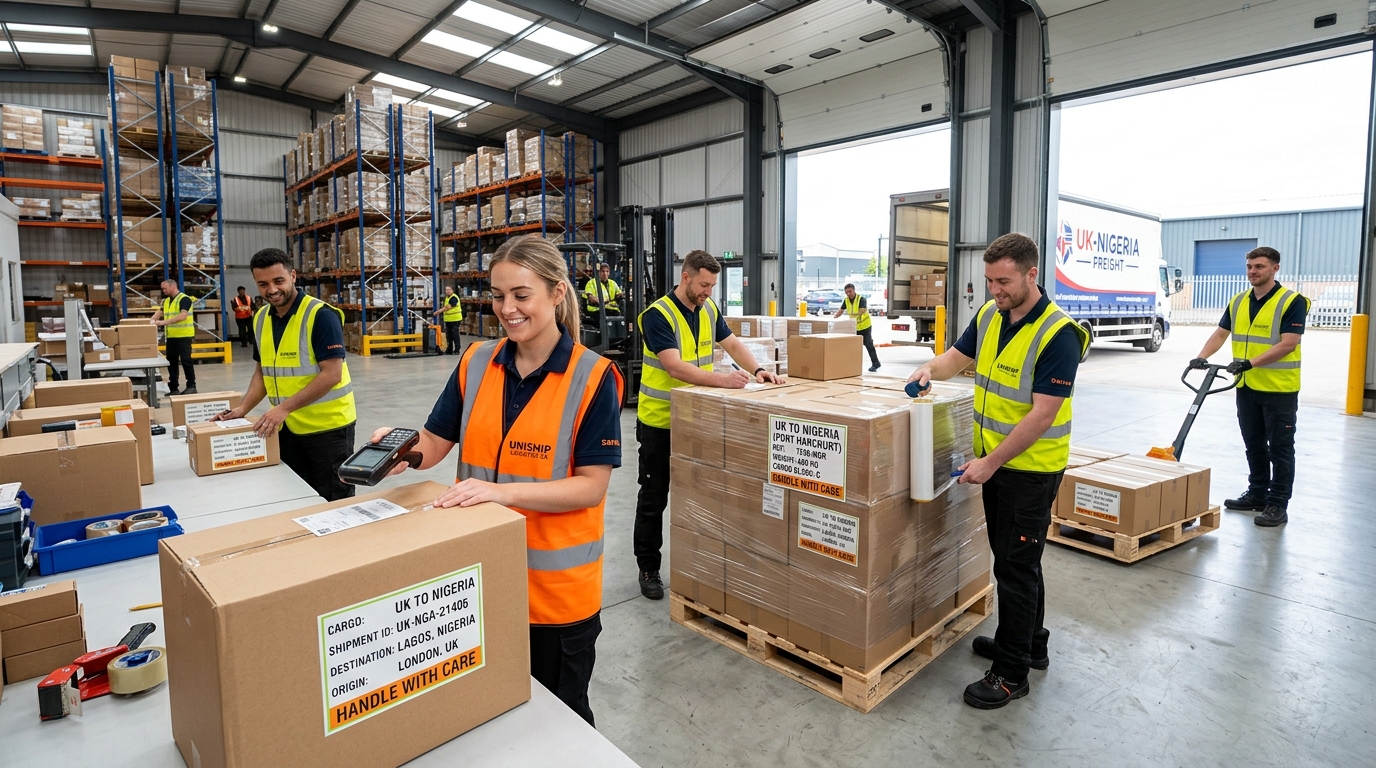
Good packaging protects your items throughout handling, loading, air or sea transport and customs inspection.
- Choose a strong outer box: Use a sturdy double-wall carton where possible. Avoid weak, wet or previously damaged boxes because they may collapse during transit.
- Protect each item: Wrap fragile items separately with suitable protective material. Fill empty spaces inside the carton so the contents cannot move around easily.
- Seal the package securely: Use strong parcel tape across every opening and reinforce the bottom of heavier boxes. Do not rely on string or light household tape.
- Label the cargo clearly: Write the sender’s and recipient’s details clearly. Where possible, place a second copy of the recipient’s contact information inside the package.
- Declare the contents accurately: An accurate declaration helps the cargo team identify restricted goods, prepare the correct documentation and reduce avoidable customs delays.
What Items Should Not Be Shipped?
Some items are prohibited or restricted because they may be dangerous, illegal or unsuitable for air or sea transport. Examples can include:
- Aerosols, pressurised sprays and flammable liquids
- Perfumes and certain alcohol-based products
- Loose lithium batteries and some power banks
- Fuel, gas cylinders, bleach and hazardous chemicals
- Illegal drugs, unlicensed weapons and other contraband
- Cash, bank cards and certain high-value items
- Live animals, plants, soil and some perishable foods
Restrictions can vary by carrier, service and destination. Do not pack a questionable item without first checking with County Cargo. An undeclared restricted item may delay or prevent the entire shipment from travelling.
How Does the UK-to-Nigeria Shipping Process Work?
Step 1: Request a quotation
Tell County Cargo what you are sending, the estimated weight or dimensions, the destination and when the shipment is needed. The team can recommend standard air, express air or sea cargo.
Step 2: Deliver the cargo or arrange collection
You can bring your package to the County Cargo office in Liverpool or ask whether collection is available for your location.
Liverpool Office: County Cargo, Unit G6, Queens Dock Commercial Centre, 67–83 Norfolk Street, Liverpool, L1 0BG.
Step 3: Weighing and invoicing
The package is checked and weighed before the applicable shipping and handling charges are confirmed. Payment must be completed before the goods are shipped.
Step 4: Dispatch to Nigeria
Your cargo is assigned to the appropriate shipment and moved to Nigeria. Delivery estimates begin according to the applicable shipment schedule and service conditions.
Step 5: Customs clearance and arrival
All international shipments may be inspected by customs. Clearance time can vary depending on the goods, documentation and government procedures.
Step 6: Collection or local delivery
Once cleared, the recipient is contacted regarding collection or the available delivery arrangement. Lagos rider delivery may be available. For destinations outside Lagos, goods may be sent to an agreed collection point, transport park or local delivery provider, with any additional charge confirmed separately.
How to Avoid Shipping Delays
You can reduce common delays by:
- Sending before the weekly cut-off time
- Providing the recipient’s correct Nigerian telephone number
- Using strong and secure packaging
- Declaring all contents accurately
- Removing restricted or prohibited goods
- Supplying invoices and requested documents promptly
- Paying the shipping invoice before the dispatch deadline
- Allowing extra time when the shipment is needed for a fixed event
Delivery times are estimates rather than guarantees. Flights, weather, customs inspections, public holidays and local transport conditions can affect the final arrival date.
Why Choose County Cargo for UK-to-Nigeria Shipping?
County Cargo supports individuals, families, personal shoppers and businesses sending goods from the UK to Nigeria. Customers can choose between standard air cargo, express shipping and sea cargo according to their timeframe and budget.
From our cargo company UK to Nigeria network based out of our Liverpool depot, we help customers prepare their shipments, understand the available service and arrange onward movement to Lagos, Abuja and other Nigerian destinations.
Get a UK-to-Nigeria Shipping Quote
Ready to send a package to Nigeria? Tell us what you are sending, the weight/dimensions, and the destination. We will recommend the most suitable shipping option.
Get Your Quote Now